 Plant As Deco
Small Room Decor
Small Dining Nook Ideas for Apartments: Fit the Table
By Plant As Deco · Updated 18 November 2026
Most apartments skip the dining table because the room seems too small for one, and then every meal happens on the sofa with a plate on the knee. The fix is a nook, not a dining room: one corner, a table that is round instead of square, chairs that tuck all the way in, and a light that marks the spot. That is the whole nook, and it costs a small table and two chairs, not an extension of the room. Renter-safe, and the corner it takes is usually the one that was holding nothing.
Weekend-ready: $60–$220, one afternoon. No walls, no drilling beyond one hook — renter-safe throughout.
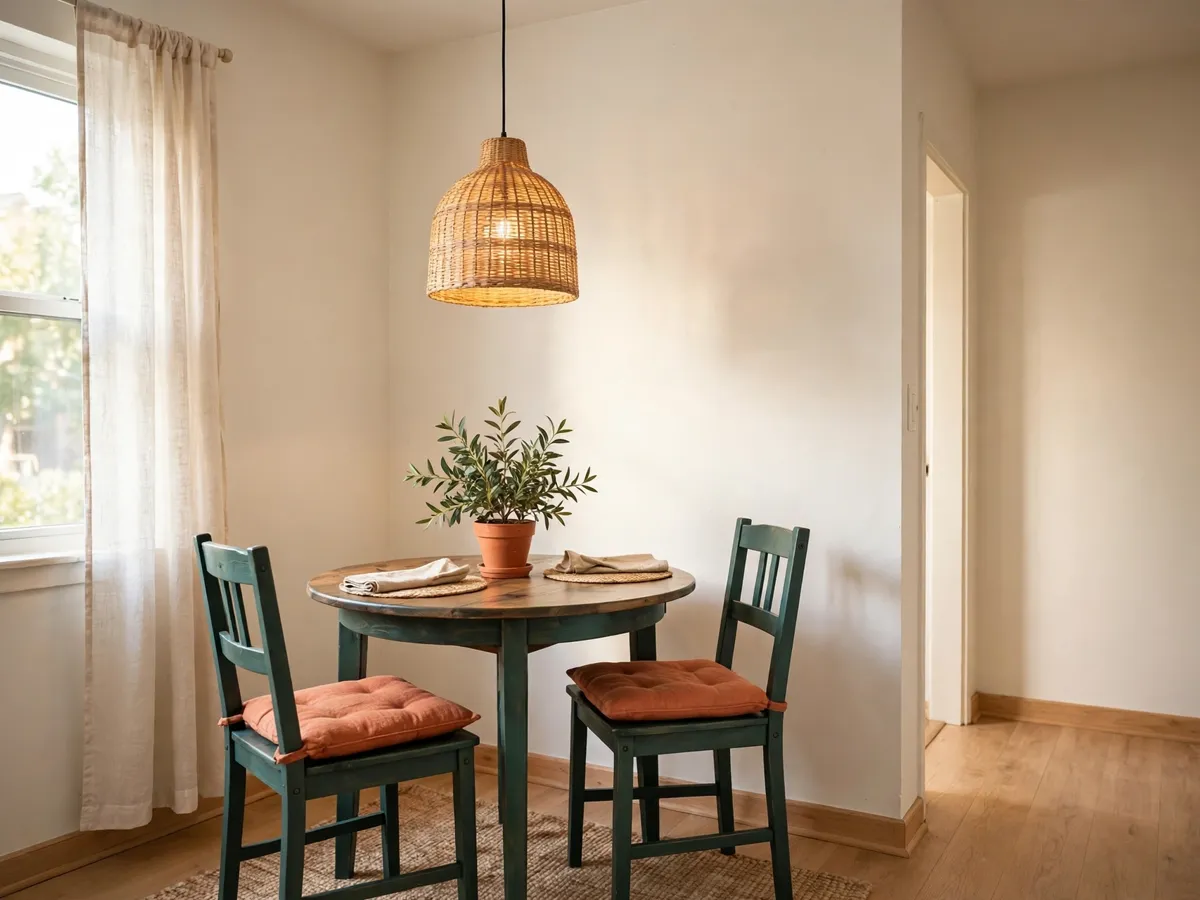
1. Pick the corner that was holding nothing
The nook goes in the corner that is currently doing no job: the dead space by the kitchen pass, the end of the short wall, or the spot by the window the layout never used. The rule is the same as every small-room plan — the corner holds one job — and the job here is eating. Measure the corner in feet before anything is bought, because the table has to fit the corner with the chairs pulled out, and the chairs pulled out are the square footage people forget. For the zoning math, the studio layout guide tapes four zones on the floor, and the eat corner is one of them.
Walk the corner before anything is ordered. A nook for two needs a footprint of about three feet by three feet for the table itself — a 30-inch round top sits inside a 3-foot square — plus a two-foot sweep strip in front of it, because a chair pulled out is the space people forget to measure. The honest corner to clear, then, is about five feet by three. To test it renter-style, tape a circle on the floor with the same diameter as the table, then carry an imaginary plate around it: if the walkway past the tape stays three feet or more, the corner works; if the tape brushes the sofa, the corner belongs to a plant stand instead.
Cost: $0 to measure. Time: fifteen minutes with the tape, the corner chosen before the table is.
2. Round beats square in every small corner
A round table is the small-room move, because it has no corners to catch hips and elbows, and the same floor holds more knees. A round table about as wide as a person is tall is short seats four at a squeeze and two in comfort, and it takes roughly the floor of the square one with none of the corners. A drop-leaf is the move for the tightest corners: flat against the wall on ordinary days, up when people come. The square table with four chairs is the dining-room move, and the corner is the place it does not fit.
Now put numbers on the round shape. A round table 30 to 36 inches across is the apartment range: 30 inches seats two with room for a shared platter, and 36 inches is the sweet spot — everyday seating for two in comfort, four when guests arrive — and it still fits a three-foot corner. The footprint formula is straightforward: the table diameter plus two 24-inch pull zones, one for each seat that faces another, so a 36-inch round table asks for about seven feet of open floor in the dining direction. And the bench that keeps sneaking back into saved photos: in practice a bench runs 40 inches or wider — a foot deeper than the table it serves — and it locks the person on the wall side in, so every seat change means the whole row shuffles. That is the arithmetic behind the skip. Two loose chairs that the corner swallows do the same job in two feet instead.
Cost: $40–$150 for a small round table or a drop-leaf. Time: twenty minutes to place it and check the chair pull-out.
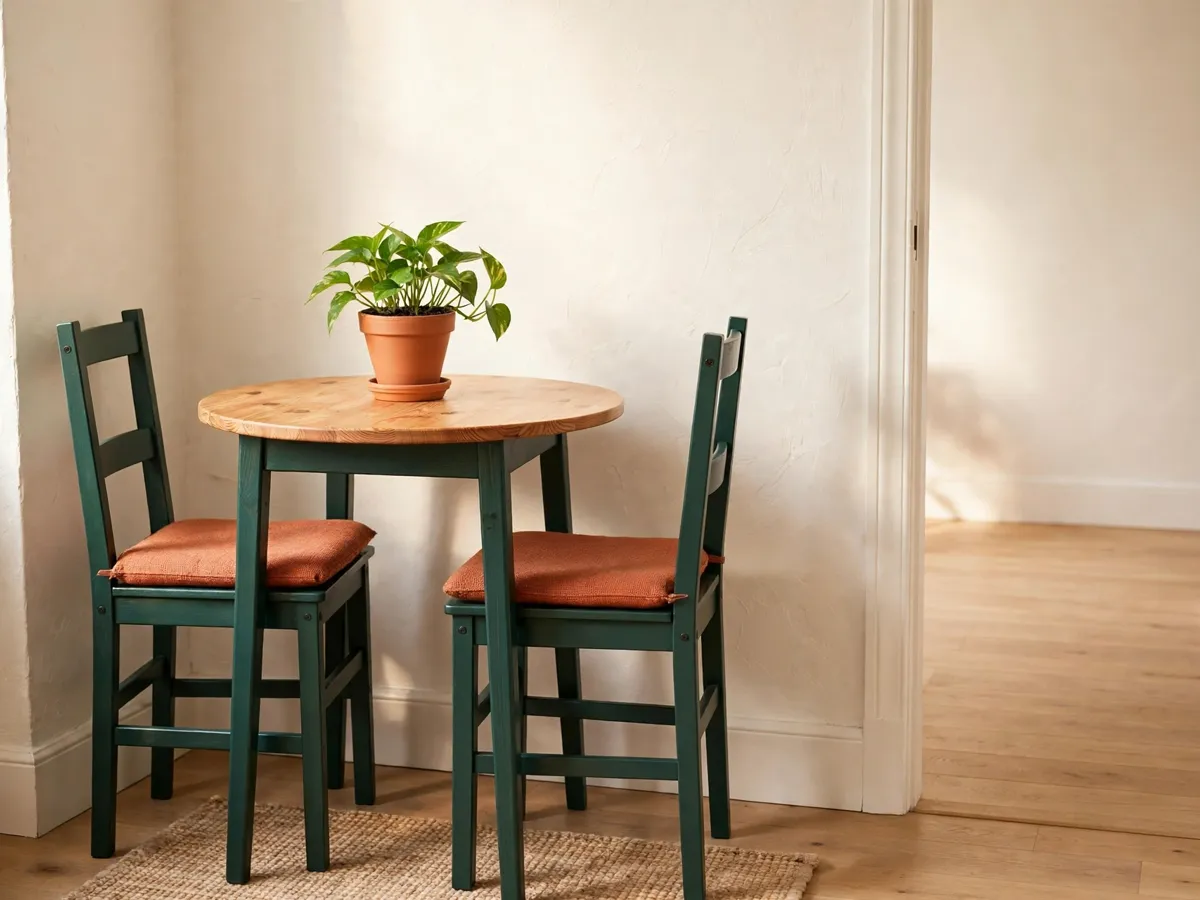
3. Chairs that tuck all the way, or the corner dies
The chair is the piece that kills the nook, because a chair that does not tuck leaves the corner occupied all day. The move is a chair with no arms that slides fully under the table — the seat disappears into the table edge and the walkway is whole again. Two tucking chairs is the everyday number; the folding chairs in the closet are the guests, and the nook seats four when it needs to without holding four chairs all week. The test is the same one the desk corner runs: stand up, and the floor should read as if the table was not there.
Numbers make the tuck test less of a gamble. Seat height between 17 and 19 inches fits a table with a standard apron — the frame rail under the top — which leaves about 24 inches of clearance from floor to apron on most small tables. Seat depth of 15 to 18 inches keeps the backrest clear so the chair slides past the rail and in. The test runs on the doorstep: push the chair flush against the table edge, and the whole seat and backrest should vanish inside the tabletop overhang — the backrest lands under the top, never against it. When a studio truly has no corner to claim at all, the tall stool at the kitchen counter is the next option, and the honest way to think of a counter perch is a step short of a real nook: dinner balanced on a ledge while the cook works at your elbow.
Cost: $20–$70 for two tucking chairs. Time: ten minutes to check each one disappears under the edge.
4. The light that marks the spot, and the set table
A nook reads as a place to eat when the light says so: one pendant or one wall hook over the table, warm bulb, on at dinner. In a rental where the ceiling is off-limits, a slim floor lamp or a wall sconce on a hook beside the table does the same job from a different corner. Then keep the table set: one small vase or plant, and nothing else, because the set table is the thing that makes the corner read as a nook instead of a shelf. For the light the room runs on after dark, the warm lighting guide is the same three pockets, and the dinner light is one of them.
If the lease allows a hanging fixture, hang the pendant so its bottom sits 30 to 36 inches above the tabletop — low enough to pool light on the plates, high enough that nobody leans into it reaching for the salt — and screw in a 2700K bulb, which reads as candlelight rather than office white. Where the ceiling stays untouched, park a slim floor lamp behind one chair at the open side of the nook; the light lands on the table from over the shoulder, and the glow still marks the spot.
Cost: $10–$40 for the light, $5–$10 for the vase. Time: ten minutes to hang or place it and set the table.
What we would skip
Skip the bench, because it is the dining-room move and the one that pins the seat against the wall. Skip the four-chair set, because the folding chairs in the closet do the guests and the corner stays walkable all week. Skip the tablecloth, which hides the wood the room already owns and adds a wash day. The one thing worth the money is the round table, because it is the piece that turns the corner into a place to eat.
Cost: $0. Time: the decisions that keep the corner to one job.
Honest costs: where the money actually goes
Table-only route: $40–$150, one afternoon, and the corner is already a place to eat with the chairs the apartment already has. Add two tucking chairs for $20–$70 and the warm light for $10–$40, and the whole nook is finished for about $70–$260. A secondhand round table is the one spend that quietly does the whole corner, and the folding chairs already in the closet are the guests the nook does not need to hold all week.
Cost: $60–$220 for the whole nook. Time: one afternoon to set it, and the test is dinner at the table instead of the sofa.
Before you buy the table: copy this
- The corner measured with the chairs pulled out, not just the table
- Round table, or a drop-leaf for the tightest corner
- Two armless chairs that slide fully under the edge
- One warm light that marks the spot, on at dinner
- The table kept set: one plant, nothing else
Cost: $0 to check. Time: fifteen minutes, before the first order.
Questions renters ask
Where does a dining table go in a small apartment?
In the corner that was holding nothing: by the kitchen pass, at the end of the short wall, or by the window the layout never used. The corner is measured with the chairs out, and the nook is the one job the corner holds.
What size table fits two people?
A round table about as wide as a person is tall seats two in comfort and four at a squeeze, and it takes roughly the floor of the square one with no corners to catch elbows. A drop-leaf is the move when even that floor is too much.
How do I seat guests without four chairs?
The folding chairs in the closet come out when people do. Two tucking chairs are the everyday set, and the nook seats four when it needs to without the corner holding four chairs all week. The corner stays walkable, and the guests still get a seat at the table.
Can I hang a pendant in a rental?
Usually not without a landlord conversation, and the nook does not need one: a slim floor lamp or a sconce on a wall hook beside the table does the same job from a different corner. The warm bulb is the part that marks the spot, and it works from a lamp as well as from a ceiling.
Is a bench better than chairs in a small nook?
Usually the bench costs more floor than it saves. A bench runs about 40 inches wide in practice, deeper than the round table it serves, and it pins whoever sits on the wall side — every arrival means the whole row shuffles. Two loose chairs keep the seating flexible instead: each chair tucks fully under the table, the walkway stays clear, and one chair can move beside the sofa when a guest comes. In a corner measured to the inch, chairs win.
Can I eat at the counter instead?
A counter with a stool or two earns its keep in a true one-room studio — the rare apartment with no corner to claim at all. Even then, the counter replaces a table only partly: the stool has no backrest to lean on, knees climb high against a 42-inch top, and every extra side dish borrows the workspace beside the stove. When there is even one corner to give, a small round table squeezed in is the better dinner, and the stool goes back to the coffee run where it belongs.
Save these on Pinterest
Pin the round-table step first, because it is the move that fits a table where a dining room would not. The zoning the corner comes from is in the studio layout guide, and the dinner light it runs on is in the warm lighting guide. Both sit in the Small Room Decor collection for the next corner you give a job.