 Plant As Deco
Small Room Decor Ideas
Apartment Decor Ideas: 8 Cozy Renter Upgrades on a Budget
By Plant As Deco · Updated 16 November 2026
Rentals feel unfinished because they were decorated for everyone and no one: beige walls, one cold ceiling light, rooms with no clear job. These apartment decor ideas are built for renters who want a home, not a showroom — zones that give one room two jobs, warm light, leaning art, one soft layer, a drop zone by the door, one green corner, and the walking-path math that keeps the whole layout working. Apartment decorating on a budget means deciding what to move, what to add, and what to leave alone. Pick two or three, finish them in a weekend, and browse apartment decor inspiration with a plan instead of a cart.
Weekend-ready: $50–$130, one weekend. No drill, no paint, renter-safe. Add $20–$60 only if you want the curtain that splits an alcove studio.
1. Zone one room with a rug so it does two jobs
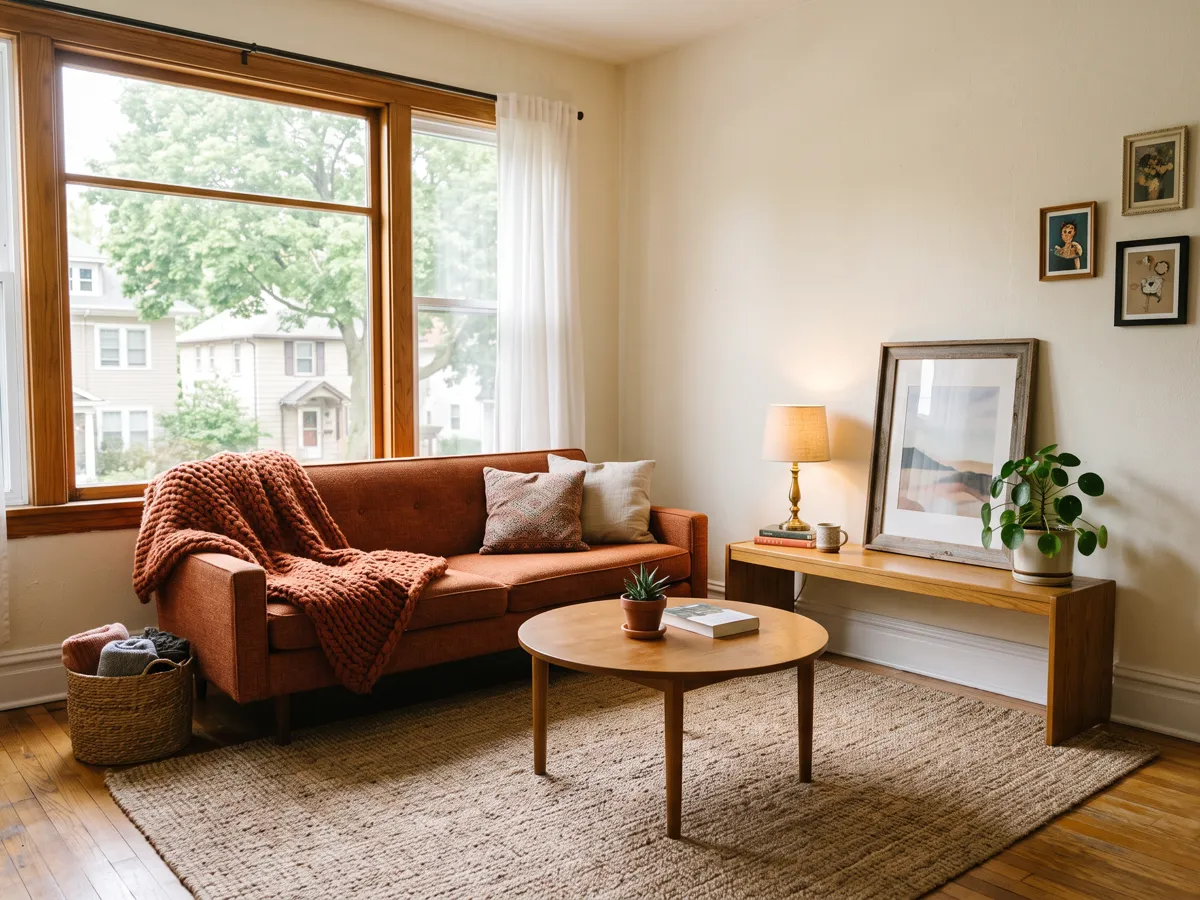
In a studio or one-bedroom, one room does everything, so nothing feels settled. Lay a rug under the seating corner and the room splits: the rug side becomes the living room and the rest keeps its own job. The rug does not need to be large — it needs to sit under the front legs of the seating. Secondhand rugs in muted tones cost little and hide tired rental carpet.
Cost: $25–$60 secondhand. Time: 30 minutes including the furniture shuffle. If the rug floats in the middle of the room, it is too small for the zone.
When the secondhand search comes up empty
The line above still stands: a secondhand rug in a muted tone is the cheapest version of this step, and two weekends of marketplace scrolling is a fair price for one. This is the fallback for the reader who has already looked and found nothing that fits the room. The rug is the only thing step 1 asks you to buy; every other move in this guide costs nothing.
See the 5 by 7 washable low-pile rug. Grey, low pile at about a quarter of an inch, and machine washable, which is the part that matters in a rental: a rug you can clean in the machine is a rug that survives the coffee spill instead of becoming a permanent compromise. A 5-by-7 is a big load, so check your machine's capacity before you count on it. The non-slip backing helps it stay put while you shuffle the seating onto it, which is the 30 minutes of work this step actually costs. The listing describes a grey Moroccan-inspired geometric, the muted tone step 1 asks for. Measure the seating footprint against the 5-by-7 before you order — a wide sectional wants the next size up. The listing also warns the rug may arrive with slight creases that flatten over a few days, so lay it down before you take the after photo.
Price and stock were checked when this guide was last updated; they move. As an Amazon Associate we earn from qualifying purchases.
2. Layer two warm lights and switch the ceiling bulb off
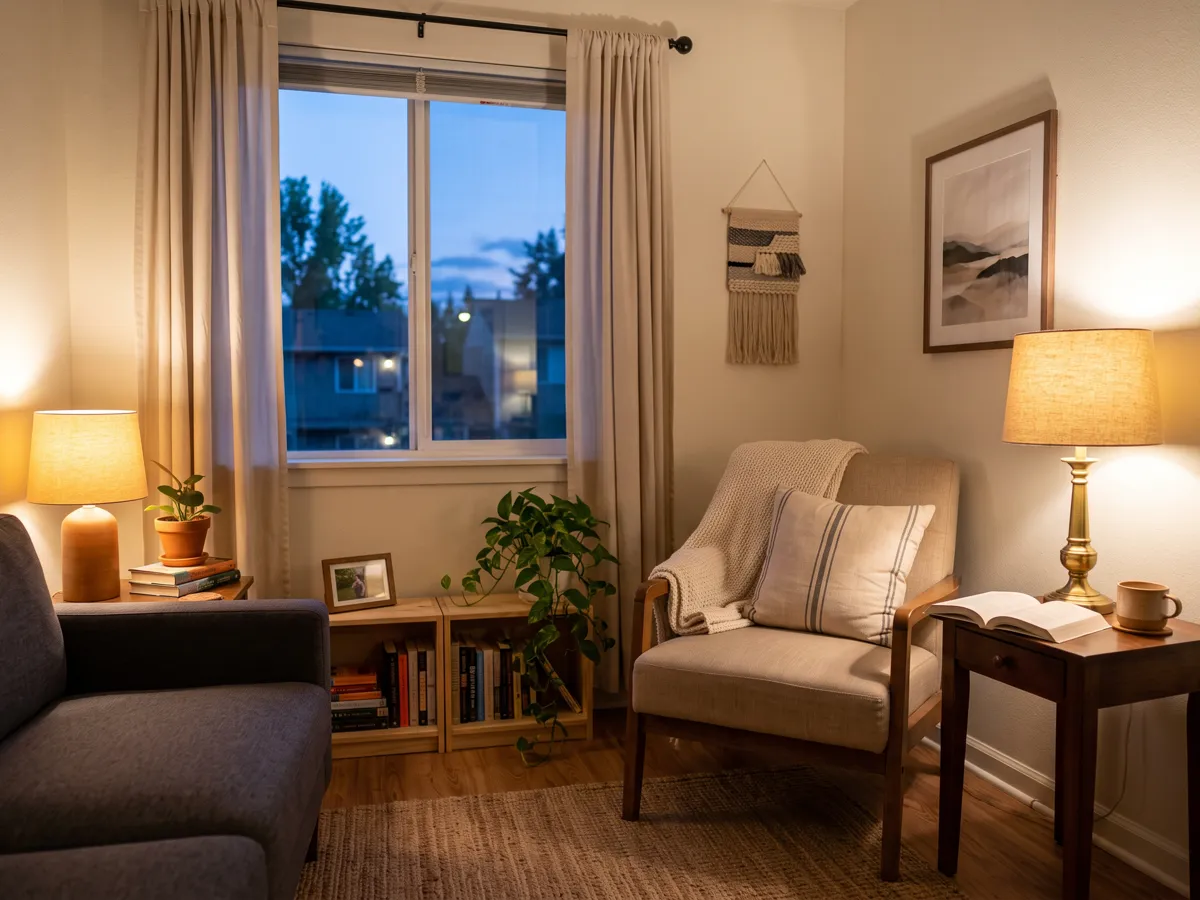
One cold ceiling light flattens every apartment into the same beige box. Use two warm points instead: a table lamp where you sit in the evening and a small lamp where you read or work. Choose 2700K bulbs — warm, calm, and cheap.
Cost: $15–$35. Time: 20 minutes. Keep the ceiling light off after 7pm for a week and watch the rooms separate.
3. Lean art instead of hanging it
The fastest apartment decor ideas skip the wall entirely. Lean one large thrifted frame on the console or dresser and stop there — two large pieces read calmer than a grid of small ones, and they need zero nails. Apartment decor inspiration boards love gallery walls, but a leaning frame gives renters the same warmth with nothing to patch.
Cost: $8–$25 thrifted. Time: 20 minutes. If a frame needs a nail to stay up, it does not belong in a rental.
4. Add one soft layer, not a full set
That apartment decor aesthetic cozy look comes from texture, not a matching set: one knit throw across the sofa or two cushion covers in a muted tone. Knit, linen, or washed cotton beats a loud print in a small space. One layer is enough — the second throw is where cozy turns cluttered.
Cost: $20–$40. Time: 15 minutes. Wash it first so it drapes like you actually live there.
5. Give the door a three-foot drop zone
Small apartments fail at the entrance: keys migrate, shoes spread, mail piles up. Claim three feet by the door — a hook line or two adhesive hooks, one tray for keys and mail, one shoe line on a washable mat. Organization is decor here: a settled entrance makes the whole apartment read tidy.
Cost: $10–$30. Time: 45 minutes including sorting the mail pile. If it does not fit the tray, it lives somewhere else.
6. Add one green plant and let fresh air in
One leafy plant in a terracotta pot softens the hardest corner of a rental — and a decorating weekend is the right moment to air the place out. Moving furniture stirs dust and new textiles shed fibers, so open the windows while you work. For the why behind it, the EPA introduction to indoor air quality explains that inadequate ventilation can increase indoor pollutant levels by not bringing in enough outdoor air to dilute emissions from indoor sources.
Cost: $8–$20. Time: 30 minutes including the window airing. One plant you water beats five you forget.
7. Swap one piece by season and stop there
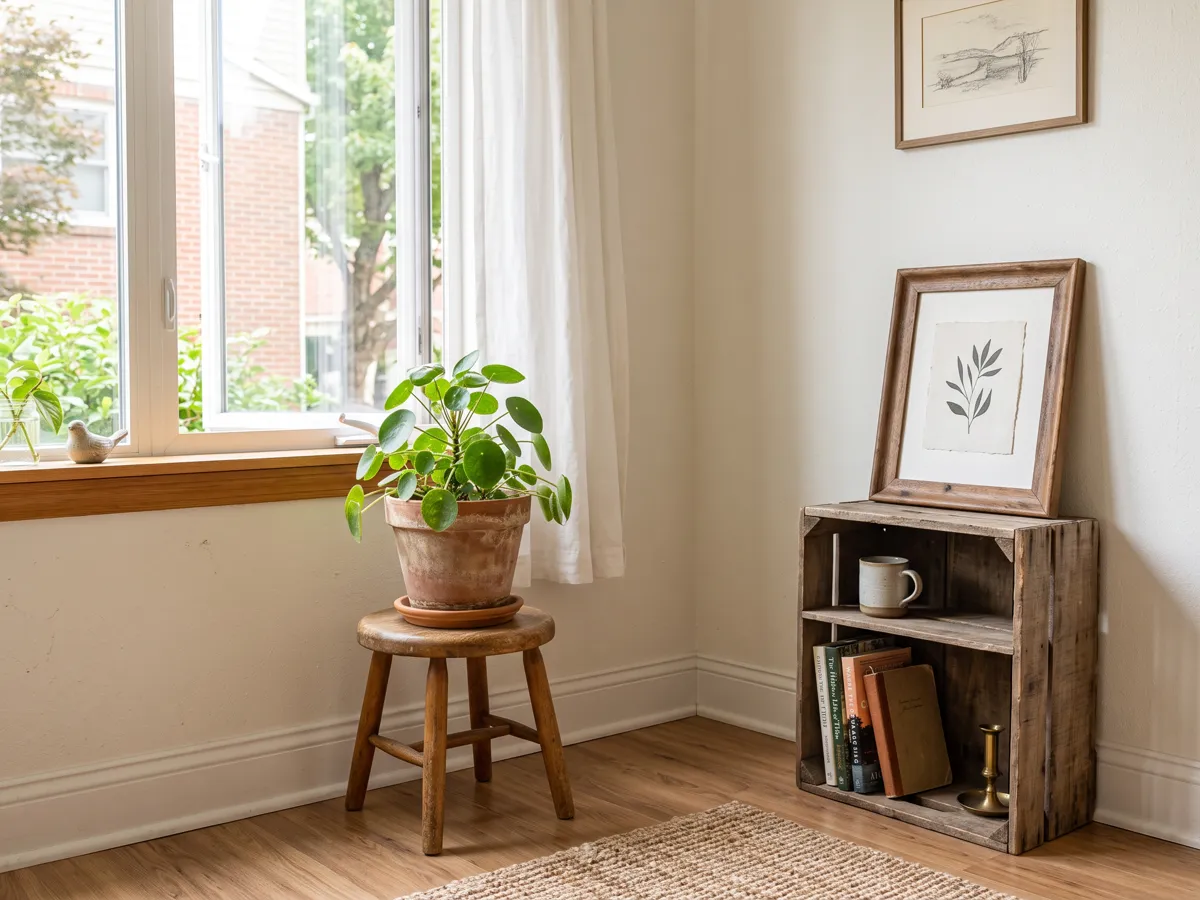
Apartments stay fresh when one piece changes with the season: a dried stem in fall, a small green print in spring. Store the off-season piece flat behind the sofa so the swap takes five minutes. One swap beats a full redecorate — the rooms keep their calm and you keep your weekend.
Cost: $0–$10. Time: 15 minutes. If the swap needs new holes or new hardware, the scope is too big.
8. Measure the walking path before you buy anything
A small apartment layout fails at floor level, not at wall level. Tape the room, then tape the path you actually walk: door to bed, bed to kitchen, kitchen to sofa. Every upgrade above only works if that path stays open, and the path is the one thing you cannot decorate around later.
How wide should the path be? The US Access Board guide to the ADA standards puts the minimum continuous clear width of an accessible route at 36 inches, reducing to 32 inches at points such as doorways. That is a public-building figure, not a rule for your own apartment, and it does not mean the ADA applies to your furniture — but 36 inches is a useful floor for a path one person uses daily with a laundry basket in their arms. In a studio, treat it as the number your layout has to protect: anything narrower and you will shuffle sideways past your own sofa every single day.
Cost: $0. Time: 30 minutes with a tape measure and painter's tape. Tape the path first, then place furniture around it — never the other way round.
The alcove studio plan: give the bed its own room
An alcove studio is one main room plus a recess — usually just big enough for a bed and a nightstand. The recess is the whole point: it lets the sleeping area be a separate place without a wall. Plan it in three moves.
First, put the bed at the back of the alcove with the headboard against the innermost wall, so the recess reads as a bedroom the moment you walk in. Second, keep the 36-inch path from the main room clear of the bed's foot — if the alcove is narrower than the bed plus the path, the bed belongs against the long wall instead, and the recess becomes storage. Third, separate the two zones with something see-through: a curtain on a tension rod, an open shelf with books and a plant, or nothing at all but a rug that stops at the alcove line. Solid dividers kill the light, which is the one thing a small apartment cannot spare.
The same logic splits a square studio with no alcove: bed against one wall, the rug zone from step one on the opposite side, and a single line of sight from the door to the window so the room still reads as one space. The bed-as-sofa version — a daybed against the long wall with two cushions — works when the room is too small for both jobs and you would rather have a real living room. The cozy living room checklist covers that half of the room.
Cost: $20–$60 for a tension rod and a curtain, or $0 if the rug from step one already draws the line. Time: one afternoon, mostly measuring.
Common questions
How do I zone a studio apartment without a wall?
With a rug, a light line and one see-through divider. The rug defines the living zone, two warm lamps at the zone edges make the split visible after dark, and an open shelf or a curtain on a tension rod separates the bed without blocking the window. The rule that keeps it calm: every divider stays see-through, and the path from step 8 never crosses a zone in the middle.
What is a good small apartment layout for one room?
One that protects the walking path and gives each job a corner: sleeping against the longest wall or inside the alcove, seating on a rug at the opposite end, and the drop zone inside three feet of the door. If two jobs fight for the same corner, one of them moves or goes — a desk on the foot of the bed is the most common layout mistake in a studio.
How wide should walkways be in a small apartment?
Treat 36 inches as the floor for a path you use daily and 24 as the absolute minimum for a gap you only cross occasionally, such as behind a chair. The 36-inch figure comes from the US Access Board's accessible-route guidance for public buildings, not from a decorating rule — but a path that is comfortable with a basket in your arms is the same path that makes a small layout work.
Should the bed go in the alcove or the main room?
In the alcove, whenever the recess holds the bed plus the path. The recess gives the sleeping area walls it does not physically have, and the main room keeps one clean job. Move the bed into the main room only when the alcove is too narrow, or when you would rather have a daybed-and-sofa living room and a bed that doubles as seating.
Do these upgrades work in a one-bedroom too?
Yes, room by room. The rug zone, the two warm lights, the leaning frame, the drop zone and the seasonal swap are room-level moves, not studio tricks — a one-bedroom just runs the checklist twice, once for the living room and once for the bedroom. The layout math still applies: tape the path in each room before you buy anything for it.
Weekend checklist: copy this before you start
- Rug zone laid, seating pulled onto it
- Two warm light points set, ceiling light off after 7pm
- One large leaning frame placed, nail-grid plans dropped
- One soft layer added — throw or two cushion covers
- Drop zone claimed, one plant watered, windows aired
- Walking path taped at 36 inches before anything was bought
Before and after: what actually changes
Before: beige box, one cold ceiling bulb, rooms with no clear job, keys everywhere, walls blank. After: a rug that splits the room in two, two warm light points, one large leaning frame, one soft layer, a three-foot drop zone, one green corner with fresh air, and a taped walking path that never closes. Same lease, same rooms, same deposit. The difference is zones and light, not a renovation.
Skip the lease-breakers: painting without written permission, peel-and-stick over textured walls, or heavy shelves on adhesive brackets. Small spaces deserve good design, not a deposit dispute.
Save these on Pinterest
Saving this checklist beats memorizing it. Pin the two upgrades you will do this weekend, then come back when the apartment is done — the Small Room Decor collection holds the rest of the room-by-room ideas.