 Plant As Deco
Small Room Decor
Small Living Room Makeover on a Budget: A Weekend Plan
By Plant As Deco · Updated 18 November 2026
A small living room makeover fails the same way every time: the photo is taken, one new thing is bought, and the room slides back because nothing under it changed. The real makeover is two upgrades and one clear rule, done in a weekend, for under a hundred dollars. Take the honest before photo first, move the layout to where it earns its floor, and let the two buys be the rug and the light. That is the whole plan, and it is the one that holds.
Weekend-ready: $40–$150, one weekend. No paint, no new sofa — renter-safe throughout.
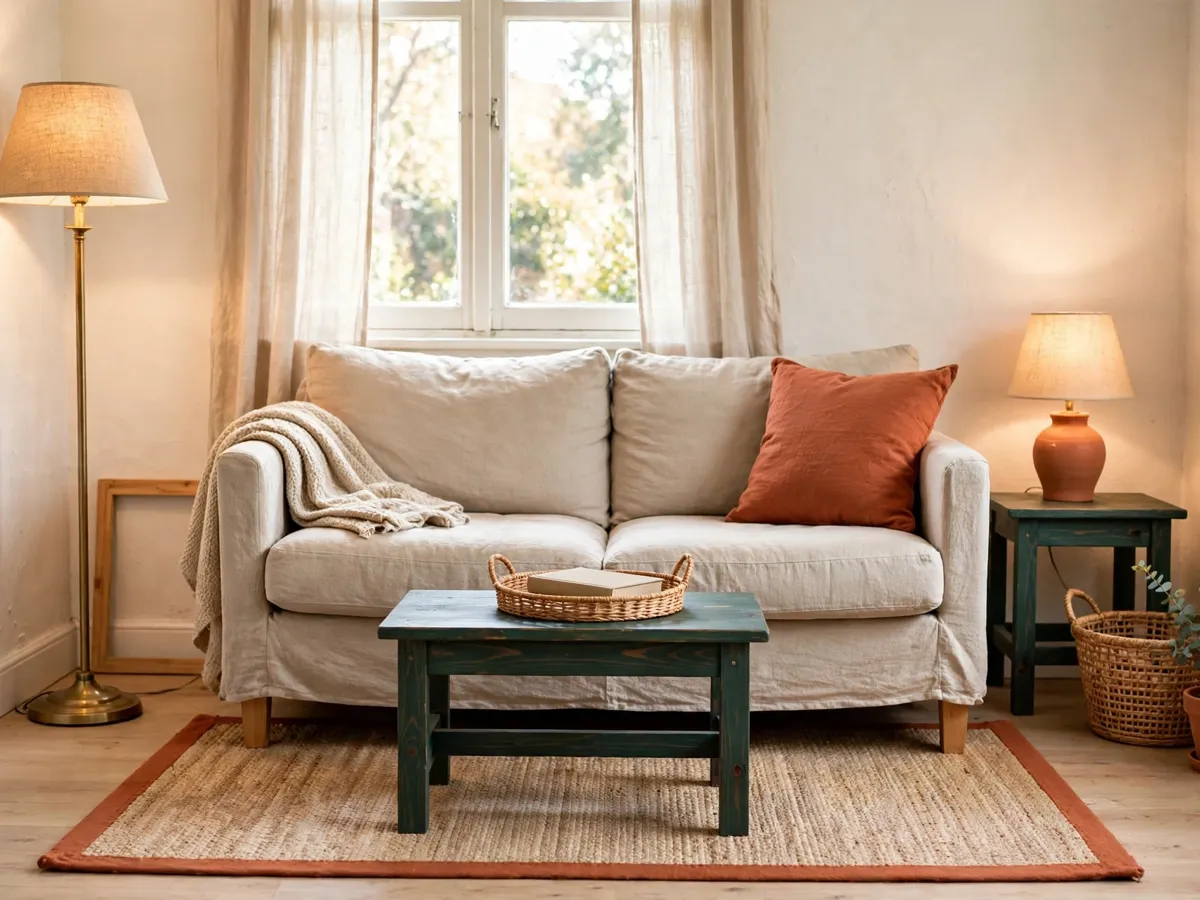
1. Take the honest before photo first
The before photo is the makeover, because it is the one that shows what the room actually is, not what the mirror pretends. Take it from the door, at eye height, with the lights the way you actually keep them, and take a second one from the sofa the way you sit in it. The two photos are the two views the room runs on, and every decision after this is measured against them.
Then look at the two and name the one thing that makes the room read wrong. It is almost always one of three: everything is pushed against the walls, the coffee table holds the room, or the light is cold. Naming the one thing is the move that saves the budget, because the makeover fixes one problem, and the one that is not named gets bought at instead of fixed.
Cost: $0. Time: 10 minutes, and it is the step the whole weekend hangs on.
2. The two upgrades that actually change the room
Two buys change a small living room, and the two are the rug and the light. The rug goes under the front legs of the sofa and holds the seating zone, so the room reads as one space instead of a few pieces floating in an apartment. The light is two warm bulbs at two heights — one by the arm of the sofa, one at the far corner — so the room reads as a set of warm pockets at the hour you actually sit down. Everything else in the makeover is a move, not a buy.
The layout is the free upgrade that carries the two buys: the small living room layout guide covers the focal point, the sofa wall and the lane the room has to keep clear. The makeover is the two buys on top of a layout that already works, and that is why it holds.
Cost: $40–$110 for the rug and the two lamps. Time: an afternoon, and the two are the ceiling of the buying.
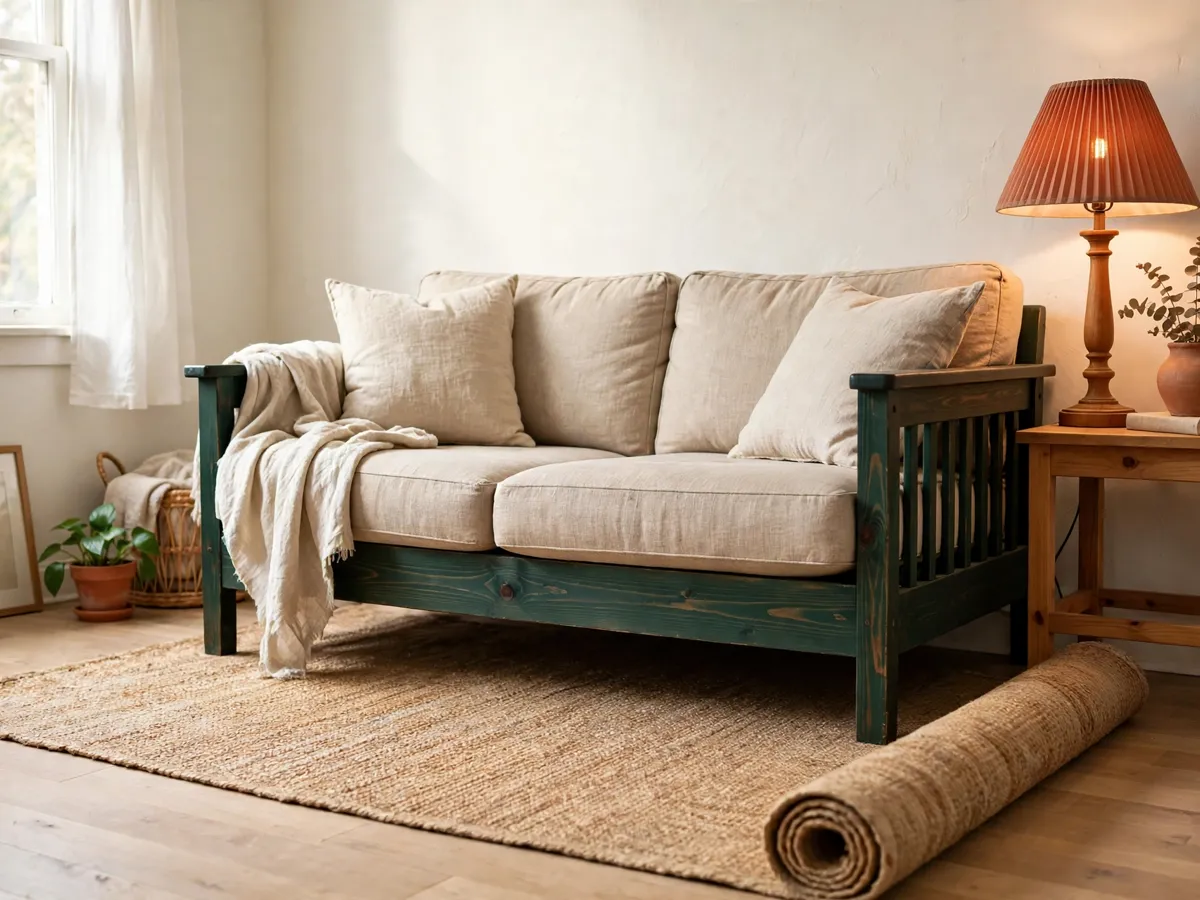
Paint, wall panels or wallpaper: one wall, one decision
Once the layout and the light are set, the wall is the next decision, and in a small room it is one wall, not four. Three routes, four lines: cost, time, move-out risk, and how long the look stays current.
- Paint: $30–$80 for one wall, covering a quart of mid-range paint plus a roller, a tray and tape. One day, plus a dry night before anything goes back against it. The risk lands at move-out, when a painted wall usually means repainting it back unless the lease says otherwise. About five years before it reads tired.
- Wall panels (a beadboard or wainscot kit): $90–$260 for a kit cut for one wall, and one weekend to fit it. A panel kit fixes to removable trim, so the wall behind it usually survives and the panel lifts off at move-out. About ten years of staying current.
- Peel-and-stick wallpaper: $40–$120 for one wall's worth of rolls, and half a day to put up. The risk sits at removal: on old paint the backing can take the finish with it, so a small test piece in a corner is the cheap check before a whole wall. About three years of staying current — a short-lease choice.
Then the one-wall rule does the rest. In a small room, one treated wall reads as a decision, and four treated walls close the room in. Pick the wall the eye lands on from the door — opposite the doorway, or behind the sofa — and leave the other three alone.
For the wallpaper route in full — the wall, the pattern, the hang — the wallpaper for small rooms guide covers it step by step.
The rental ranking: a panel kit if the wall has to change without touching the paint, paint if the lease allows a repaint, and peel-and-stick if the wall is sound and the stay is short.
Time: half a day for wallpaper, a day and a dry night for paint, a weekend for a panel kit.
The order of work that saves a second repaint
The order of the work matters more than the speed of it, because each step protects the one after. Seven steps: clear and clean, repair, the wall decision, large pieces, lighting, textiles, art and small decor. Run them out of order and the room charges you twice, usually in paint.
Clear and clean first, because a wall behind a sofa cannot be judged and a room full of boxes cannot be measured. Repair next: nail holes filled, a bead of caulk along the baseboard, the outlet covers back on the wall. Both are small jobs, and both decide whether a wall reads finished or patched.
The wall decision comes third, before the furniture, which most people flip. Furniture first feels efficient because the sofa is the biggest thing in the room, so it gets placed and then painted around. In a small room that sofa decides where the paint has to stop, and hauling it clear of a wall to paint behind it is the second weekend nobody budgeted for. Choose the wall, finish it, then let the large pieces land against a surface that is done.
Large pieces next: the sofa and the rug. The rug goes in before the art, and that is the order most often skipped. The rug sets the floor zone the seating reads as one space on, while art hangs to what is already there — the sofa back, the edge of the rug, the line of the light — so a frame placed first usually moves once the rug lands. The rug and lamp sizes belong to the small living room decor guide, so this plan stays on the order.
Lighting comes before textiles, and textiles come before art. The lamps decide what the wall looks like at eight in the evening, the hour the room is judged at, and a throw or a curtain changes the warm layer the frames sit on. Art and small decor go last, one piece at a time.
Cost: $0, the order is free. Time: one weekend end to end.
Three budget tiers, and what each one actually changes
Every makeover budget lands in one of three tiers, and each tier buys a different kind of change rather than more of the same one. Two things no tier fixes: the flooring, and a layout the room cannot support. Naming that first is what keeps a $300 plan from quietly turning into a $900 one.
Tier 1, $0–$150: rearrange and paint one wall
What changes: the seating comes off the walls, two textiles swap (a throw and a pillow cover, or a spare set of curtains), one wall gets paint, and the bulbs go warm. That is a rearranged room with a focal wall and a warmer evening, for the price of a can of paint and two bulbs.
What it cannot fix: the floor, and a layout the door swing rules out.
Tier 2, $150–$450: paint every wall and move the light
What changes: every wall gets the same paint, one light source moves to where you actually sit, and two textile pieces carry the soft layer — curtains and a throw, or a throw and two pillow covers. The room reads finished rather than rearranged, because one wall color removes the joins the eye was catching.
What it cannot fix: a worn floor, and a seating plan that faces a blank wall with nothing to look at.
Tier 3, $450–$900: treat the wall the room faces
What changes: the wall the room faces gets a treatment, a panel kit or wallpaper on that one wall, the floor gets a zone from a rug or the sofa gets a slipcover, and the lighting is replaced rather than re-bulbed. This is the tier where the room stops reading as a rental and starts reading as decided.
What it cannot fix: square footage, and a layout the room cannot hold. Nothing at this price adds floor area, and none of it makes a sofa fit a wall it does not fit.
Pick the tier by the one thing the before photo named. Cold light is a Tier 1 problem, and a new rug will not solve it. A room that reads unfinished is a Tier 2 problem. A blank wall the whole room faces is the Tier 3 problem, and the only one a wall treatment solves.
Cost: $0–$900, one tier at a time. Time: one weekend for Tier 1, two for Tier 2, three for Tier 3.
3. Restyle what the room already owns
The rest of the makeover is free, because the room already owns it. Clear the coffee table to one tray and one book, and the center of the room reads open for the first time. Move the throw to the arm of the sofa, and the piece the room already owns becomes the layer that makes it cozy. Lean one frame under the window instead of hanging three, and the wall reads as one moment instead of a gallery. For the no-drill hardware the frame needs, the renter wall decor guide covers the strips and their weight ratings.
The test for each restyled piece is the same as the whole room: does it have a job, and is the job one you actually use? The tray holds the remote and the glass, the throw comes off the arm, and the frame is the one the eye rests on. The piece with no job is the one that gets cleared, and that is the move that costs nothing and changes the room the most.
Cost: $0. Time: one pass, an afternoon, and the room is restyled out of what it already owns.
What we would skip
Skip the new sofa, because the layout and the rug do more for the room than the furniture swap does. Skip the paint, which is a second weekend and a landlord conversation. Skip the accent wall, because one wall painted bold in a small room reads as a photo, not a room. The one thing worth the money is the rug, because it is the piece that turns the seating into a zone for the price of one buy.
Cost: $0. Time: the decisions that keep the budget in the two buys.
Honest costs: where the money actually goes
Move-only route: $0, a weekend, and the room already reads as a room instead of a storage box. Add the rug for $40–$90 and the two warm lamps for $10–$40, and the makeover is finished for about $50–$130. A secondhand throw is the one spend that quietly finishes the sofa, and the cold ceiling light is the one thing the plan does not keep on.
Cost: $40–$150 for the whole makeover. Time: one weekend to set it, and the after photo is the one that shows the room at the hour you actually use it.
Before the weekend: copy this
- Before photos taken from the door and the sofa, with the lights as you keep them
- The one thing that makes the room read wrong, named out loud
- Two buys only: a rug under the front legs, two warm bulbs at two heights
- Everything restyled from what the room already owns, each piece with a job
- After photo taken at the same two spots, same hour of light
Cost: $0 to check. Time: 15 minutes, before anything moves.
Questions renters ask
How much does a small living room makeover cost?
Under $130 when the two buys are the rug and the light, and everything else is a move. The room reads made over when the layout works and the light is warm, and neither of those is the expensive part.
Where do I start a living room makeover?
The before photo, then the layout. The photo names the one thing that makes the room read wrong, and the layout is the free fix that carries everything after it. The two buys come last, and they are the ceiling.
Do I need a new sofa to make over the room?
No. The rug and the light do more for the room than the furniture swap does, and a restyled sofa — one layer at the arm, a cleared table — reads made over without the buy.
How do I keep the room from sliding back?
One rule, checked on the first of the month: the coffee table holds one tray, and the floor holds nothing that is not furniture. The slide-back starts on the surfaces, so the surfaces are the ones to guard.
Save these on Pinterest
Pin the before-photo step first, because it is the move that names the one thing worth fixing, and the cozy layer that finishes the sofa is in the cozy living room aesthetic guide. Both sit in the Small Room Decor collection for the next room you make over.